Adsense

A bit of music from the lamented Radio Blog Club

Le Français

Toujours, je suis désolé pour mes amis( et amies) français(es), mais il est difficile pour moi d'écire en français. Peut-être un jour...
S.V.P. regardez ce LIEN

Saturday, October 13, 2007

Modifications

This is a popular subject - well it seems to be judging by the amount of emails I receive from Fulvia owners keen to extract more power, better brakes, more grip and so on from their cars.

Since many are naturally keen to keep their ideas to themselves, my lips remain sealed, but I have seen some lovely things on my computer's screen

Perhaps some of you would care to share your developments with those reading this blog.

Email me on var1016@gmail.com

I look forward to hearing from you.

Monday, October 08, 2007

VISTA ("tm")

Hello again after a long gap. I have been quite busy and also rather lacking in inspiration, though thanks to one of my regular visitors, I have a Fulvia idea or two.

This piece (rant) is another that does not concern our favourite motor-car; it is about computers. Since one way or another, all of you must be using a computer to read this, I feel justified in claiming to be at least relevant.

Here’s what my dictionary says about VISTA:

vi’sta n. long narrow view as between rows of trees; long succession of remembered or anticipated events etc. Mental prospect or retrospect, (opened up new vistas or a new vista to his ambition); hence ~ed (~ad) a. [It. = view (visto seen, p.p. of sedere see f. L. Videre)]

A few things to ponder here: I especially like “long narrow view” whilst “long succession of [...] anticipated events” is to me, profoundly depressing.

No doubt you will have guessed that I have just acquired a new computer, and so I have. A nice thing I suppose, with lots of memory, a huge disk drive and dual-core processor etc. All well and good but for effing VISTA.

What a con! Virtually nothing works with it; most of those software CDs which one has stored carefully (or in a plastic bag in my case) are useless or virtually so. Nearly all those old friends, programs that were perfectly satisfactory, will not work in VISTA. I prefer not to mention the hardware position… Even worse, being in France, I have the French version, which I suppose is good for my French, if not for the migraines. And guess what? Uncle Bill will only provide other languages if one has one of the top-of-the-range versions of the system. Stingy I say. And, every time you want to do something, there’s the pop-up asking for authorisation, followed by yet another question.

Oh yes, VISTA looks nice and there is a good HELP section, but what’s the point? Apparently MS committed $500,000,000 just for the launch of VISTA. Oh dear; all that money (never mind what it actually cost) for a wash-out.

It seems that I have come late on the scene: Microsoft has delayed the putting to death of XP from January to June next year, following what appear to be howls of anguish from the professionals and perhaps mugs like me (if MS actually listens to us virtual cannon-fodder).

As soon as I can arrange it, this computer is going to be formatted – yes, the hell with it, XP is going in and VISTA can rot in the recycle bin.

You have been warned.

Thursday, September 27, 2007

Radio Blog Club

Hello again after rather a long gap. Fulvia fans may care to know I am in the throes of drafting some new stuff for them, but in the meantime, I decided to post one of my non-car articles.

Those of you who have enjoyed at least some of the eclectic selections of music I include hereabouts might be interested in Radio Blog Club.

It is Radio Blog Club that provides the means whereby I can add music to this page. It is free and easy to use and in addition, one can build one's own virtual juke-box.

On this subject I have decided that Fats Domino's "Fatman" is to be a permanent fixture here - I make no apology for this!

Happy listening

Wednesday, August 15, 2007

Promises, promises!

I have been promising on the Viva-Lancia forum to post pictures of two tools useful when working on Fulvia engines.
The first is a modified piston-ring compressor. With standard piston rings, normally a compressor is not necessary, but with the thin rings fitted on some pistons (1mm, 1,5mm and 3mm rather than 1.5mm, 2mm and 4mm) I have found that breakages are possible - especially with the very fragile oil control rings. You will see that the compressor has been cut (ground actually) to match the angle of the vee.


The cutter is used for widening the valve clearance pockets in pistons when larger valves are fitted. It is made from a spare valve, of a suitable size of course with the aid of an angle grinder. It is easy to use: just insert in the guide, mount the head onto the engine with a couple of dowel bolts and with a battery drill apply rotation and very gentle pressure. Less than 30 seconds is usually plenty to provide a new pocket in exactly the right place. There is not normally any need to deepen the pocket. It is a good idea to smear a little grease to catch the small amount of swarf created, so that it may be collected afterwards.

One problem might be to find a suitable valve to make the cutter. I was lucky: I found a 40mm valve with the necessary 7mm stem. Most modern 7mm stem valves are for four-valves-per-cylinder engines and tend to be too small.

Friday, August 03, 2007

Pour Les Fumeurs

Source: Here

Further to my post of 1st July concerning SMOKING, CM of Jouraprèsjour has told me about a splendid group in Austria. The website may be found HERE

Kick the nanny habit!!

[It is against the law to smoke on this blog, but I do anyway, so raspberries all round]

Source: Here

Fulvia Mid-Engined Special: an Update


For more recent readers, the original articles on this car were HERE and HERE.

Robert the owner, is not a man for standing still. He has decided that fuel-injection is the way forward. We did exchange a few emails on this topic, I pointing out the expense and complexity etc.

However, not to be deterred, Robert pressed on and sourced a set of Japanese motor-cycle injection. His immediate problem was how to mount this onto the Fulvia inlet manifold. This was solved by the very nice piece of machining shown here..


When assembled, as the pictures show, the installation looks extremely good. I am waiting to hear how this will all be programmed etc., but I suspect that the results will be excellent.


Even more radically, the latest idea is to invert the inlet manifold enabling downdraught inlet and providing plenty of cold air.

That 500kg 1300cc car will be even quicker than when I had a ride in it.

More in due course.

A New Client

I mentioned recently that I had made a trip to Normandy to attend to a Fulvia.

The client is new in a sense in that he is new from the point of view of my working on his car, but in fact he was a customer of Evolution Engineering. He purchased several items from us including our exhaust manifold and a pair of the special dampers that I have on my own car.

Since the closure of Evolution, we have remained in contact and finally we got to meet.


The car is quite interesting. It is a 1600 SII but I suspect it might be one of the 200 or so SII “540s” i.e. not the conventional Lusso. The owner told me that when he acquired the car it was fitted with steel doors – but with non-opening quarter lights which is most unusual. Only the very first Fulvia coupes had such doors. More mysterious is the Fanalone block, easily identified by the (redundant) alternator mounts. I think that he will investigate the chassis number!

The owner had had the engine rebuilt at considerable expense, for example the specially made camshafts which cost him a great deal of money! The firm that rebuilt it appear to have made a good if rather costly job of it.

An interesting item fitted by the company was the programmable ignition, something I have always wanted to have on my car. The blue computer lead socket on the right of the box may been clearly seen in the picture. With this equipment it is possible to set the advance for each 100 rpm step, using a simple Excel spreadsheet. This of course could be done on a rolling road with a laptop. One of the advantages of the system is the ease of installation. There are no external sensors as is the norm with such systems, just a “chopper” in the distributor. The mechanical advance weights and springs are removed and the rotor carrier is locked to the drive shaft. Whilst elaborate sensors etc. are a better route, I believe that this system makes for an excellent compromise and a great improvement over the conventional type of system.


The programmable ignition unit

The owner had recently fitted a replica “works” inlet manifold together with a new pair of Solex ADDHE 45 mm carburettors. These carburettors were considered by many experts to be very good, but sadly Solex introduced them rather late and not so long before the company went bust.

He had had a great deal of trouble with the manifold. He told me first of mis-aligned ports and then of appalling porosity. He had had shown great resourcefulness in solving these problems, which for an item costing about £300 he should not have had to do, in my opinion.


The 45mm Solexes

He met me at the station and drove back quite briskly; the car felt as though it had good potential and felt solid. There were however flat spots. Attempting to cure these by increasing the static advance setting resulted in both a much quicker car but appalling pinking. Lacking the information for the ignition there was nothing I could do in this regard, but some time spent on the carburettors produced a most worthwhile improvement. Now, the car started much more readily, but with the overlap of the camshafts and the large carburettors, idling was not as it should be. The problem was that we had no data for the ignition and neither did we have the means to re-program it; it was obvious to me that increased static advance was necessary with a slower increase to follow. There was also a suspicion that at around maximum torque (4500 – 5000) the engine was a little rough suggesting that there was perhaps a little too much there. The only proper answer is a rolling road of course. I believe that the owner will address this giving him the chance to optimise both the carburettor jetting and ignition advance curve.

Now it was my turn to drive the car over some delightful French rural roads. I have mentioned these before – and the lack of traffic makes motoring a pleasure. I found the car powerful and willing to rev easily up to 7000 rpm. However I found the steering to be incredibly nervous. I imagined that the toe was incorrectly set, but back at the workshop I found that the subframe required a considerable amount of tightening up. This had a very satisfactory effect (!) although I still think that the toe requires re-setting. My choice is normally at the minimum specified (1mm out) although I have known racers to set it at parallel which makes for sharper turn-in although at the price of “nervousness”.

After I had left the owner contacted me to say that he was most pleased with the progress whilst of course understanding the constraints under which we had to operate. He added that the car, on the way to Paris pulled 6700 rpm in top gear which with the tyres fitted represents about 116mph, perfectly respectable (in my eyes anyway) although I think that there may well be more to come.

When I have more information I shall provide an update.

Sunday, July 29, 2007

Matt Is Back!

Apologies for the problems with the New Yorker cartoons.

Happily, Matt is back - hurrah!

Friday, July 27, 2007

A Parisien Recommendation

This is not the site for a tourist guide for Paris; in any case; the "City of Light" should need no plugging from me, although I must say I do love the place.

Should you be fortunate enough to find yourself there, and fortunate enough to be in the 15th arrondissement then I can recommend with great confidence a bar/restaurant on Rue de la Convention. The bar is called Carpe Diem and is located directly opposite the church of St Christophe about 150 yards from Le Pont Mirabeau - the Mirabeau bridge for you non-francophones.

The other night, my girlfriend and I enjoyed a spendid meal: she had a superb salad with salmon and many other things followed by a Moelleux au Chocolat, whilst I enjoyed three courses starting with a very good chevre chaud, then a fine piece of rumpsteak in a good sauce with excellent sauté potatoes and a mousse au chocolat (also excellent) to finish - and of course a coffee. We drank four beers, 75cl of a very drinkable Bordeaux and ended with a couple of digestifs.

The bill? just 58 euros, about £39, a bargain indeed especially in view of the quality of the food and the very friendly service.

Carpe Diem has only recently opened under its present management, take advantage whilst you can still get in. The French Foreign Ministry will soon be taking over the recently refurbished Imprimerie Nationale next door. I expect that when this happens, Carpe Diem will be packed with fonctionnaires!

Wednesday, July 25, 2007

An Itinerant in England

The All DHT Amplifier in Early Testing Form

Well, I am finally back in France after an interesting trip.

This of course commenced with my attendance at the three days of the Goodwood Festival of Speed or Mud as some called it especially on the very wet Sunday. I suppose I had better not mention rain any more as I feel that my English readers will be angry!

I have not mentioned so far, another of my other "talents" or at least, abilities. I have warned in the past that this blog will contain articles other than about Fulvias; this is one of them.

I have spent a number of years designing and building Valve ("tube" for Americans) amplfiers for hi-fi. I have even proof-read a couple of books written in the subject (Valve Amplifiers 3rd edition and Building Valve Amplifiers both written by Morgan Jones)

On arriving at a friend's place in London I was offered work building a couple of amplifiers that would use (my friend's predilection) Directly Heated Triodes. For those not in the know, these are very old valves indeed dating from the 1930s and sometimes even earlier. Afficionados of these insist that the resulting sound is more detailed and revealing of the music than that obtained with more "modern" valves. Transistors in these circles I should add, are not considered...

The first of the amplifiers was just a straightforward line stage or pre-amplifier. The second was a more ambitious design. The order from the customer was for two of these - one for each channel. The specification called for an all direct-coupled three-stage design. This necessitated a considerable amount of effort and study of valve data plus many calculations. And then came the labour of planning the layout - that is finding space for all the bits, which is always tough. Here's a picture of the underside:

Experts will notice that there are transistors present, but they are there for "housekeeping" purposes, just to make conditions correct for the all-important valves.

The client came to hear the amplifier and was delighted with the sound and is very keen to know when I can return to England to build the other one!

The experience has rather inspired me to build something for myself, which I may well do when I have the time. Indeed I have already done most of the design and do have the valves I need to build it.

As they say "Watch this space".

Finally watch this space, as I have a report coming up about a 1600 Fulvia belonging to a new client who lives in France and on which I worked last weekend.

A bientôt

Saturday, July 14, 2007

Rallye Rochois

Sorry for the lack of postings; recently I have been in England for a while.

However, I can report that the Fanalone ran very well on the Rochois - partly thanks to my preparation and largely thanks to the excellent driving and preparation of my client.

She was placed fifth in VHC (historic cars) - behind four Porsches, the Porsche 911 being the popular choice for these rallies.

Well done I say

Sunday, July 01, 2007

A "smoke-free" England

I am at present in England, following a wet but interesting Goodwood Festival of Speed.

Here, finally the fascist nannies have won: as from today, 1st July 2007, smoking in public places has been banned in England & Wales.
Expect a further enormous outpouring of patronising, smug, self-congratulatory words from the "great & the good" - as they ponder the next area of individual behaviour to sanction. Take care all ye passionate anti-smoking types; see how you feel when your favourite activities are banned on largely spurious grounds.

For me, the end of years of style & elegance thus:

The global warming types are another variety of the species - be ready to defend your old Lancias!

Thursday, May 31, 2007

Morgan et Moi

Yours truly enjoying the experience

One of the advantages of being freelance or perhaps itinerant (!) is having the chance to take pleasant opportunities when they arise.

A friend of mine, another English ex-pat., has a business based near Toulouse in south-west France. The company is called The Classic Route; it rents Morgan cars to holiday-makers who wish to experience the pleasure of motoring in some really lovely countryside. Here is a link to the website.

My friend contacted me to say that he had two new Morgan Plus 4s awaiting collection in England and would I like to join him in driving one of them to Toulouse? You can imagine that I had to think long and hard about this chance...


My friend explained that such a trip made economic sense: first it actually costs less than having the cars delivered - despite the fact we took our time and stayed in decent hotels with secure parking. Second, the cars are run in properly by the time of arrival and any minor niggles can be identified. And third, there is also the pleasure of driving an open car in France.

So I flew from Geneva to Gatwick on 17th May, a happy date because it coincided with the monthly meeting of the Lancia Motor Club which takes place at the Abinger Hatch pub near Dorking. An excellent chance to meet some friends after two years away, and enjoy a glass or two of good real ale. My friend (a former Fulvia owner) and another and I travelled in a hired FIAT Punto 1400. This model must have the slimmest horses ever found in a motor-car.

The best-laid plans of mice and men etc... On the Friday, various business matters delayed our arrival at Richard Thorne's establishment near Reading and we didn't set off until nearly 8:00 in the evening.


Two nearly ready to go

Initially I found the Morgan Plus 4 rather strange. It is many years since I sat so far back in a car, with a rather nice long louvred bonnet stretching out in front of me. However I did find straight away that Morgan has improved the damping considerably (compared with my previous experiences of the marque) and the ride except on extreme bumps is very good. It took me a few miles (conscious of the responsibility) to adjust to everything.

En route to catch the last shuttle to Calais just after 11:00 p.m., we were passed on the motorway by a chap in a Ferrari 360. In our open cars, we were able to appreciate the splendid noise it made. We met him again at the terminal and he told us he removed the cats - hence the noise! Naughty but nice...

Our first stop was Rouen, we finally went to bed at about 5:30, so Saturday was a rather late start - about midday.


Saturday

Saturday treated us to lovely weather, during the day at least, so despite having to observe a self-imposed rev limit of 3500 the driving was most enjoyable. We stopped for lunch at Le Mans where the cars attracted (as in fact they did everywhere we went) a lot of interest. We had to answer quite a lot of questions e.g. "Is it a replica?" "How fast does it go?" etc. My friend answered all these with great patience and a smile (a born PR man I think).


I didn't expect to see this at Le Mans!

Our evening stop was at Angouleme where we relaxed over a good dinner and a nightcap in a very lively bar.

Sunday was perhaps the best day. We were able to move to the Routes Nationales et Departmentales and with the cars having covered nearly 1000 miles, we were able to start enjoying the Morgans as they are meant to be enjoyed - and believe me they are enjoyable, especially on sweeping curves... Our trip took us through the famous wine-producing areas around Bordeaux, where we stopped for lunch in lovely St Emilion. Continuing south we drove through the valley of the Dordogne with its excellent scenary, chateaux and pretty towns and villages.

The Dordogne


Sarlat

Soon after Sarlat, it was time to take the Autoroute once again for the last leg to Toulouse, where we garaged the undamaged (thank God!) but rather fly-speckled cars and settled down for a fine dinner, in my case including excellent Magret de canard for which the area is so famous. Toulouse itself is a very attractive city, with an active cultural life - well worth visiting.

There will not be any more Morgan trips this year, but there are plans to expand the fleet to include a couple of classic Triumphs or MGs. I sincerely hope to be asked for those!

And if the above appeals, you can meet The Classic Route at its stand to be shared with Richard Thorne (Morgan and classic Lancia dealer) at the Goodwood Festival of Speed at the end of June.

Fanalone Update

Source: Here

You might remember that I changed the camshafts on the Fanalone. Well the results have been very good.
Last weekend the owner took part in the Rallye Vins Mâcon. I was not there myself (I usually am) but again the car ran well. Unfortunately the exhaust system cried enough aftersix years, so there is some more work to do before the next rally, a local one, Le Rochois. Local knowledge counts for a lot in rallies, so we are hopeful!
More soon.

Tuesday, May 22, 2007

A Long Silence?

Dear readers,

So sorry for the lack of activity here over the past couple of weeks. I have been away, working on various things, the most recent being an interesting trip to England, where I had to collect a new car and drive it down to Toulouse.

The car in question was unusual and I shall be writing this up shortly.

Thanks for your patience and loyalty

Saturday, May 05, 2007

Fanalone Trouble

A short while ago I mentioned that it was time once more to roll out the Fanalone for another season. The owner prefers not to run the car in the winter – especially here in Haute Savoie where so much salt is put down on the roads.

I began with a road test as is traditional in all servicing procedures. Whilst the car went quite well I thought that it was perhaps not “au point”.

First move some cars!

I removed the cam cover (I regularly check the torque setting of the head bolts with the engine warmed up) and noticed damage to one of the lobes on the exhaust camshaft. Turning the engine revealed damage to a lobe on the inlet camshaft too.


The two damaged lobes may be clearly seen here

With an invitation to open the Rallye Beaufortain for this weekend, action had to be taken.

The camshafts were special ones – the ex-works profile that Barry Waterhouse used to offer at Evolution Engineering. These are quite fierce with 100° of overlap and 11.3mm lift (4.3mm at TDC) and it has to be said that they are a bit brutal with the valve springs, although I ran a set for some years with no problems. The carburettor jetting is modified to take account of the camshafts of course. The only option was to remove the camshafts from my own car. These are not quite as extreme as the originals but have 86° overlap and 10.5mm lift (3.8mm at TDC).

On dismantling, the cause of the trouble was quickly found: the hardening had failed on some of the rocker faces. More dismantling was necessary: this time the spare Fanalone engine was “visited” and some of its rockers removed to replace the damaged ones.

With all re-assembled, the engine fired eagerly and immediately, always very satisfying. After warm-up, only very minor adjustments were required to the idle settings. The subsequent road test showed the car to be smooth and with good torque and willing to rev quickly to 7000. There is evidence that the valve springs are reaching the end of their life making a built-in mechanical rev-limiterJ. They will have to be replaced providing an opportunity to lap the valves and have a look around – after all the valves have not been touched for six years and 22 rallies!

As I write, the owner is at Beaufort for the rally and as the 'phone has not rung, I assume that all is well… Incidentally, the rally is for modern cars only, but the French club La Scuderia Lancia was invited to provide cars for opening and “sweeping up” (voiture balai). Amongst those providing these services apart from the Fanalone, are some Evos and an 037 stradale, a touch of class amongst all the moderns I think.

Friday, May 04, 2007

Nora - the Feline Pianist

Amazing I think - and great fun.

Sunday, April 22, 2007

Back in Action


Yes, for another season (the fifth) without an engine overhaul, the Fanalone has been dusted off. Its first engagement is an invitation to open some of the stages at the Rallye de Beaufortain.

Those who you who a fortunate enough to be in the area will have the chance to see an 037 Stradale, two Evos and the Fanalone in action - in opening duties that is.

Next week I shall be putting a spanner here or there on the Fulvia to ready it for its outing.

The Beaufort (sur Doron) area is stunningly lovely, nestled in the French Alps. I drove through a couple of years ago on my way to Milan; a rare treat it must be said. Another link here.

More on the upcoming rally programme when plans are completed.

Saturday, April 14, 2007

Amal Carburettors and the Parker-GN

Well, would you like to try it?

Those of you who have read my series on developing the Fulvia engine, might recall that in Part VI, I mentioned as a possible option, the use of Amal motor-cycle carburettors.

The Amal carburettor is a simple but effective device. Fuel is regulated by means of a single needle and jet arrangement, as in the S.U. carburettor, and the Amal too has a piston free to move vertically. The difference is that whilst the S.U.’s piston is raised by the manifold depression, the Amal’s is lifted by the throttle cable – there is no butterfly - so at full throttle there is a completely clear passage. The carburettors were available in bore sizes of up to 42mm.

Apart of course from motorcycles, the Amal was used on cars before the Second World War, notably by the extraordinary Freddie Dixon on his very fast Rileys that raced mostly at Brooklands. And in the 1960s it was possible to buy tuning kits for Minis that incorporated a pair of Amals.

Perhaps the most successful application, certainly in terms of achievements, was in the Vanwall four-cylinder 2.5 litre Formula one car in the late 1950s. However, this was an application with a difference: the carburettors were used solely as throttle bodies, since the engine was fitted with a Bosch fuel-injection system. Sorry about the small picture but larger versions are available from the source (at a price).

The Vanwall engine with its Amals

It seems that Amals are are still available here and here although I suspect that the larger ones might be difficult to find, but there are also modern Japanese carburettors manufactured by the likes of Mikuni and Keihin which are similar in many respects. Another possibility is Dell'Orto which still manufactures single choke motor-cycle carburettors. Remember that because the Amal presents a clear path a smaller diameter will probably suffice.

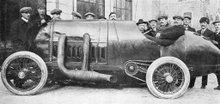
To conclude this short piece I should like to add a little about the formidable racer whose pictures appear here. This car is known as the Parker-GN. GN (Godfrey and Nash) was a small company that manufactured “cycle-cars” in the early 1920s. Usually powered by a vee-twin Matchless or J.A.P. engine, the cars featured a very effective gear-change mechanism and chain drive and thanks to their light weight, went very well for the time. Around 1925 the founders, H.R. Godfrey and Captain Archie Frazer-Nash separated, with Frazer-Nash going on to make the famous cars that bore his name which, up to 1939*, still used the chain drive system; later he designed various hydraulic devices including a famous gun turret. Godfrey went on to make H.R.G. cars which achieved some fame ceasing some time in the 1950s. They, like Frazer-Nashes, are very valuable now.


The Cirrus engine showing the four early Amal carburettors

The Parker G.N. is rather different: it is, rather improbably it must be said, fitted with a Blackburn (or De Havilland) Cirrus aero engine. This is an air-cooled four-cylinder of around six litres capacity, and as may be seen in the pictures, fitted with four Amal carburettors. I have seen this car racing several times in the capable hands of Richard Scaldwell and believe me, it is seriously fast!

There are some brave men around.

Sadly I have never heard of anyone fitting a Fulvia with Amals, but the principal appeal is that by staggering them the disadvantage of the uneven length ports could be overcome.

If any one has heard of a Fulvia being thus equipped I would love to hear about it.

* The company had since been bought by the Aldington brothers who founded AFN, the famous Porsche dealers (AFN = Archie Frazer Nash).

Tuesday, April 03, 2007

Land-Rover Antics - Part III

In Part II of this short series, I mentioned that being an ex-military vehicle, the wiring arrangements were rather different from standard. One might add “and how”!

Bill pointed out that the vehicle was fitted with a heated windscreen which had never worked. Indeed the windscreen must have been a costly item: it had very fine (for obvious reasons) heating wires inside the glass running from top to bottom. SII Fulvia owners will recognise the idea as it is similar to the heated rear window fitted to those cars.

The Land-Rover had been an army radio vehicle, so there were many now unused fuse places in the large fuse box – find that fuse!. I knew also that there had to be a relay somewhere – I had already checked the windscreen heater for continuity and it was fine. Bill has a factory workshop manual which showed some details but not all – and no locations!

As is quite common with electrical faults, I spent many hours trying to trace the circuit. This was subsequently found to be even more complex as there turned out to be an internal short-circuit to ground somewhere inside the military wiring harness which is practically impossible to dismantle. Secondly, the control relay – a very special high-current item, which I eventually found buried in a stack of wires behind the instrument panel was controlled by a voltage level unit. Quite ingenious, as this means that one cannot drain the battery since once voltage drops to a certain point, the relay will be shut off. Typically, the damned thing didn’t work!

So I rewired everything behind the instrument panel and ran additional cables to the windscreen heater with an in-line fuse. The ammeter confirmed that all is now well.

I then did quite a lot of the same concerning the heated rear window!

From time to time Bill had experienced a fuel starvation problem. This is nasty on diesel-engined vehicles as of course once there is air in the system the engine stops and that’s it! The installation as I mentioned in Part I was not very nicely done, and this included some rather hit and miss “modifications to the fuel lines not to mention something similar in the turbo piping (more on this later). Bill decided that he would take no chances in future and so he purchased a Facet electric fuel pump to assist the lift pump that is installed in the injection pump unit. I managed to fit this (just) on the bulkhead under the driver’s seat right above the fuel tank, together with a relay and a small fuse box which will provide a useful additional source of current should this be required in the future. There is a reassuring lack of air visible in the piping now.

A useful feature on an expedition-type vehicle is an inverter to provide 230v A.C. so that e.g. a laptop computer can be run. The one installed had packed up, so Bill bought a better-quality one which inevitably was rather bulkier. With the amount of accessories fitted space was becoming increasingly in short supply. I devised a neat solution: behind each of the windows is a security grille, so we hung the unit from one of these. The installation which Bill did, is very neat as may be seen in the picture below.


The final electrical task was to persuade the front side lights to work. This turned out to be due to the horrid “bullet” connectors so beloved of British manufacturers – I have experienced vast amounts of grief with these on Jaguars, Austin-Healeys Triumphs etc., etc. As usual one or two had corroded – not behind the lamps where one would expect of course, but once again buried underneath a pile of coloured “spaghetti” behind the central switch panel…

Next time: Turbo pipes, half shafts and other bits and pieces.

Sod the Law!

SMOKING IS NOT ONLY PERMITTED ON THIS BLOG - IT IS ACTIVELY ENCOURAGED

New Internet Speed test

Music and Radio Blog Club

Radio Blog Club, a good friend for a while appears to be in some legislative difficulty...

However, in tribute to its brave effort, I shall leave the existing track on this page (which amazingly still works)

Sadly my Playlist no longer works (hence its removal) thanks to the absurd "Hadopi" legislation in France. Apologies to all.