Adsense

A bit of music from the lamented Radio Blog Club

Le Français

Toujours, je suis désolé pour mes amis( et amies) français(es), mais il est difficile pour moi d'écire en français. Peut-être un jour...
S.V.P. regardez ce LIEN

Sunday, December 23, 2007

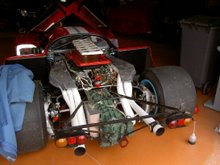
Isn't it Lovely?


Source: here

Do it yourself?

I don't think so. Despite having this wonderful picture to hand, I am not yet able to offer servicing and overhaul of Napier Sabre engines!

A bientôt

One Way to Attack the Knock Problem

No more worries about inexact ignition timing: now it's possible to programme the ignition to suit your own Fulvia.

This illustration comes from Mecaparts; it shows a reasonably-priced programmable ignition system that can be easily adapted to the Fulvia. Of course it is in French, but this is Fulvias in France! It is the system fitted to my Norman client's car about which I wrote here. My French is not nearly good enough to offer to translate the entire site, but I can probably help with specific queries if you care to email me.

If you visit the Mecaparts Site here, you will find a number of Acrobat files which give full information about the installation and programming of the system. It can be calibrated up to 11,900 rpm which should be enough for any Fulvia! On my client's car, the advance weights had been removed and the distributor locked (i.e. the rotor arm can no longer move relative to the distributor shaft) this is obviously necessary since all the advance is controlled by the electronics.

To me this seems to be an excellent solution for the Fulvia - especially as I doubt if many wish to go the route of complete engine management. Here is a system that could be installed by any competent amateur. Programming however requires a certain amount of knowledge and it would probably be best to set the the system up to an approximation of the original advance "curve" (some straight lines actually) and then take the car to the rolling road to establish the ideal parameters which could then be programmed into the system - or done on the spot with a laptop.

Should the car in question be further developed, the system could easily be re-calibrated to suit. And of course you would have the capacity to deal with any eccentric changes in fuel quality that may be implemented should the "Green" lobby decide to make things difficult for old cars.

Perfect really!

I have also found something interesting regarding the mixture side of things; more about this soon.

A bientôt

Saturday, December 22, 2007

Private Eye to the Future

Private Eye has a fine record in anticipating events and indeed, nemesis for certain individuals; there is often in the magazine a piece called "Curse of the Eye" where the Eye's predictions which have subsequently become true are reported.

Source: Private Eye No 1120

Depressingly this cartoon appears to represent the status quo. From my point of view things are not going to get better...

Bon Noël à tous, et à bientôt

New Post

Apologies for the delay, the new post has now appeared, several posts "ago". In other words you have to scroll down. I am so sorry, but as I wrote earlier, it is not my fault.

To help you find it, here is a link.

My girlfriend was indeed able to help: she has reserves of patience that I cannot begin to comprehend, despite my having worked on Fulvias for 25 years. In the end I rather - or further - lost my temper and deleted one word: "embed" and added another: "object" each with those infuriating chevrons, and lo and behold, the bloody thing worked!

A bientôt

Friday, December 21, 2007

On smoking and aero engines

I mentioned in an earlier post Roy (later Sir Roy) Fedden boss and chief at Bristol engines, in connexion with a biography of the great if sometimes eccentric, engineer.

In this book, the story is told of Lord Beaverbrook, proprietor of the Daily Express and also Minster of Aircraft Production during the Second World War. His mission was to put a rocket up the backsides of the aircraft manufacturers - which indeed he did.

On a visit to Bristol''s engine department, shown around by Fedden, he remarked (in an effort no doubt to raise workforce morale) "Why are none of the men smoking?" Fedden replied "You can't have chaps working to a tenth of a thou (0.0001" = 0.0025mm) with a fag dangling from their lips".

But at least they could have a "fag" in peace after the shift was over with their pint in the pub. Their descendants are now denied this simple pleasure.

A bientôt

Quick Note - Sabre again!

In this thread on a forum I found, some kind soul has scanned a set of pages from Setwright's book "The Power to Fly" which gives a bit more of the story.

Especially interesting on fuels.

A bientôt

L.J.K. Setwright & the "Sabre" engine


Now thoroughly gripped by the subject, I have found a super article about the Napier Sabre Engine.

The original and iconoclastic L.J.K. Setwright was obviously as smitten as I am! The article is replete with his interesting and highly technical observations - in particular note his comments about combustion chamber shapes. The horsepower figures, apparently from a reliable source more than confirm what I wrote the other day, but Setwright is, I am sure, incorrect in his observations about thinwall bearings, which he credits to Napier. These were invented by the Clevite Corporation in the U.S.A. and it was Tony Vandervell who, by staying on the reception sofa at Clevite's offices for two days in or around 1932, finally got them to give him the European licence to make the bearings in his works at Acton, west London.

The article also "lifts the lid" on the acrimony and bitter competition between the aero-engine makers in England, whilst the country was fighting for its life. I have read the biography of Roy Fedden, boss and designer at Bristol engines and the author, whose name I regret escapes me, endeavoured to fight Bristol's corner, rather as Setwright has tried to do for Napier.

A bientôt

More Smoke

Those of you who had a look at the video I posted on this subject will have deduced, probably correctly, that the French fumeurs et fumeuses are resigned to their loathsome fate.

Not so Les Allemands it seems, if this article from the International Herald Tribune is to be believed.

Good luck to them: it is worth remembering that it was one A. Hitler of the N.S.D.A.P. who wanted a "smoke-free Germany" by 1941 - and he failed - ha-ha!

A bientôt.

More "Tempestuous" Stuff

The Tempest has taken me over.

As I said, it is one of my favourite aircraft. My excuse for including the clip (from You Tube) is the glorious sound of the 24-cylinder, 2000+ HP, sleeve-valved, supercharged, 150-octane-guzzling Napier Sabre engine.


This film is obviously an Air Ministry training feature intended to obviate "friendly fire", but there's some good flying, great sounds and the whole thing, given the epoch, was very well done I think. Imagine the work - without computer imaging!

A bientôt

Thursday, December 20, 2007

Knock, knock, knock + an Apology

Source: here

I must have been asleep!

In my recent article about knock, I featured a picture of a Hawker Tempest, one of my favourite aeroplanes. Unfortunately, the version shown obviously has a radial engine, and was therefore, one of the Bristol-engined variants - my extracts at the end of the article related to the "other" engine.

The picture above shows a "proper" Tempest, fitted with the staggeringly complex Napier Sabre engine - the one that used the 150-octane fuel. For those who do not know about this, it was technically fascinating, but really a nightmare for anyone who had to do anything with it. It was a sleeve-valved, 24-cylinder, supercharged job, with the cylinders arranged in "H" formation - i.e. two flat-12s arranged one above the other. It was very powerful - I recall reading somewhere that Napier achieved 100 BHP per litre with a prototype, a staggering achievement in an aero-engine. The site (devoted to the Tempest) that provided the picture is here.

However, complexity has its price of course. It was said that during the Second World War, a horsepower from Napier cost the British taxpayer £3. A horsepower from Bristol cost £2, whilst a horsepower from Rolls-Royce cost just £1!

Napier (formerly a car manufacturer) was acquired by the English Electric Company in 1943; the final aircraft effort was even more outrageous: this was a cruciform ("X") engine; both supercharged and turbocharged, it produced over 4000hp, but jets had arrived so that, as they say, was that. Napier did have success later however with the fascinating "Deltic" engine, used in railway locomotives and also I think, in ships. A diesel, this was triangular in section as its name suggests. There were three crankshafts (one at each corner) and six (opposed) pistons per row. Think about it!

Meanwhile, following William's comment on the last article, I am looking into ignition modifications. If my searches are succesful I shall be back on the thorny "knock" problem.

A bientôt.

Wednesday, December 19, 2007

A Black Day for France

There are of course, those who would disagree with my headline.

I refer to 1st January 2008. This is the day that the French government has selected for the banning of smoking in public places in the République.

On arriving here, nearly three years ago, I had a nice smug feeling: I thought that the French would never tolerate the kind of health fascism so fashionable elsewhere in the European Union (shortly to become another République). I was wrong.


However, as part of the obsequies for the passing of a great era I attach here a video (source IHT.com) which is a pretty good summation of how all the powerless ones feel.

I am with them - 100%

A bientôt

Monday, December 17, 2007

A New French Blog

Here's a nice idea: a news blog based in Paris, so English readers, here's a chance to brush up your French. It's called "Fledermaus News"

Now that Gordon has signed the Constitution - whoops! - what IS it called this week? - you never know what language you'll have to use in five years' time!

An attractive feature about this blog is all the news stories attached; I spent rather a long time there - these are largely in English you'll be pleased to hear!

A bientôt

Friday, December 07, 2007

Something Creative -

Source here

The capacity of original artistic creativity to suprise, never fails to amaze - and indeed to surprise - me.

You can see many examples of Terry's work on his blog; I think that he is incredibly talented.

No Fulvia yet though...

Wednesday, December 05, 2007

Suck, squeeze, bang, blow - and knocking

"Where's the next gas station with 150-octane?"
Source here

It's been a long time since I wrote anything vaguely technical here and I apologise for this to my visitors. However, needs must and I have been busy with a number of things.

First the eccentric heading to this post. The first four words are a colloquial reference to the four-stroke or Otto, cycle - that which powers all our Fulvias. The fifth word owes its presence ot the fact that over the past months I have received a number of emails from Fulvia 1600 owners who complain of "pinking" (known in the U.S. as "pinging").

Despite what you will hear in the pub, "pinking" is DETONATION. Detonation is a Bad Thing and should therefore be addressed as soon as possible. I have been doing a little research in order to provide some reliable information for you in the hope that you will be able to avoid this dangerous phenomenon.

First we have to distinguish between detonation and pre-ignition - in my many years around cars and their owners, I have long been aware that considerable confusion exists about these.

Pre-ignition occurs as a result of something in the chamber being so hot that the mixture ignites before the spark. Typical causes are incorrect heat range of plug, a red-hot sharp edge in a badly modified combustion chamber, or glowing carbon residues. A typical symptom of pre-ignition is "running-on" after the engine has been switched off.

Detonation occurs when the advancing flame front at the time of ignition causes some of the remaining mixture in the combustion chamber to ignite spontaneously - i.e. before the flame front reaches it, so an explosion results. There are various causes of detonation. The best known are excessive compression ratio for the type of fuel being used, lean mixture, poor chamber design, bad gas-flowing, excessive ignition advance or any combination of some or all of these.

It is important to understand that the real danger point is that where maximum torque (or indeed Brake Mean Effective Pressure) is developed, for it is at this point where the engine is at its most volumetrically efficient - that is the cylinders contain the largest quantity of mixture achieved in the engine's rev-range. So putting your foot flat on the floor at around 4500 - 5000 rpm in a Fulvia is the time when real trouble might be expected.

Another fact that is often not understood is that a petrol engine's compression ratio, despite being quoted in the specification as say 10.5/1 in the case of a 1600 Fulvia, is variable! It is of course controlled by the accelerator pedal - when the throttles are shut, there is effectively nothing to compress. I recall driving in Italy in my own Fulvia (C.R. about 11/1) and being very frustrated because unlike elsewhere in Europe 98 octane petrol cannot be purchased - only Shell garages have "proper" petrol but at a price. So with the Fulvia's rather small tank, it was necessary to fill up with the so-called "premium" 95 octane stuff. Just to be on the safe side, I was careful to avoid large throttle openings and thus avoided problems.

I have found that when 1600s "pink" or knock, it is nearly always at low revolutions when accelerating. Two possible causes (and a third I shall come to in a moment) suggest themselves to me. First the miserable Solex 42DDHF carburettor; my readers well know my views on this excuse for a carburettor. Every one I have seen has enormous play in its spindles. this causes the uneven idle problems that has caused many to install the unsuitable 35mm Dell'Ortos which are perfect on 1300s (the Dell'Orto is a proper carburettor). The point is that when in "pick-up" mode the Solex provides fuel via the idle circuit and into the progression drillings which may be seen adjacent to the butterfly. Additional air entering via the slack spindle bushes may be enough to cause problems. Another possibility is timing chain slack which causes severe ignition timing variations. The third idea comes from a Carroll Smith book. he advised people to buy their fuel from a busy station that has a large turn-over as it is less likely that some of the more volatile elements of the fuel blend will have evaporated by the time of purchase. Thos considering gas-flowing should remember not to polish the ports to mirror finish but to leave them slightly rough; this prevents fuel dropping out of atomisation. My own car has Lucas mechanical fuel injection and despite all the modifications, I have never had pinking problems, which suggests that the carburettors and/or the inlet tracts may be in part to blame.

There is of course, plenty of information on the Web about this subject: Wikipedia is a good start. The technically-minded will be interested in two articles here and here. The two pieces are links from the Wikipedia article. In the same article there is a link to a company offering water-methanol injection; this was pioneered by the Luftwaffe during the war and greatly improved the performance of their Focke-Wulf 190 aircraft.

And talking about aircraft, if you feel you have problems feel sorry for the developers of the Hawker Tempest. Here's a quote from a footnote from this Wikipedia site:

Early Tempests suffered some engine problems mainly due to the 150 octane fuel being inadequate. One fault discovered was a problem with the propeller constant speed unit, which allowed the Sabre engine to go well beyond permissible rpm, leading to seizure or explosion. There were also problems with the induction system, the lubricating system, and the carburettor air intake (a simple backfire could lead to an explosion).


Any chance of Shell coming up with some 150-octane fuel I wonder? It would most likely be "adequate" for a Fulvia!

A bientôt.


Tuesday, December 04, 2007

More ebay


Last chance!

I am selling my last two sets of bearings: 1600 Fulvia big-ends by Clevite and another set of Federal Mogul main bearings

I also have a 1600 rev-counter for sale too.

Hurry, hurry, hurry!

Saturday, November 24, 2007

Bearing Up


Well all the bearing sets sold on ebay, and buyers got terrific bargains e.g. Vandervell main bearing set just £36 - that's a lot less than half what one would pay normally.

I now have two more sets up on ebay: here and here.

They are running out so don't miss this chance.

Meanwhile perhaps one of my readers has a copy of or access to, an old Clevite Bearing Catalogue? I have two sets ofnew big-end bearing shells - I am sure they are for an old Lancia model, but not Fulvia 1300 as one is marked, they are too big. The part number of both is CB 5006, one is standard, the other 0.020" (0.508mm).

I look forward to finding out what they are.

Saturday, November 17, 2007

Spare Parts

Hello again after a long silence - sorry but I have had to occupy myself with rather a lot of other things lately.

Anyway, I have some Fulvia engine bearings for sale on ebay. I probably do not have to tell you that these are not always easy to find.

Here are some links:

1 2 3 4 5

All the best

Paul

Wednesday, October 17, 2007

Plug and Play? I think not...

Yes, another rant about computing, this time, peripherals.
I am at present in Paris, staying for a few days with my copine. By virtue of her work she is a consummate computer user. For the business she is starting she has bought a laptop and of course decided that this should be provided with a "Wi-fi" facility. To this end she has bought a pair of USB devices which are supposed to provide wireless functionality.
We installed these yesterday, and of course they don't work; "plug and play" - one of the greatest all-time lies. Typically for this kind of thing, Windows says "the device is functioning correctly". No it isn't: it doesn't work!
Many of you might remember Bill Gates's boast that had cars progressed the way computers had over the same period, we would have cars that would do 1000 miles on a gallon of fuel etc.
This sort of thing makes my blood boil: as far as I know only the computer industry seems able to get away with murder: imagine if you bought eggs that were merely empty shells, a new car with no engine, a washing machine that did not wash. What about a surgeon who sewed you up leaving your brain on the floor of the operating theatre? How long would the purveyors of such goods and services stay in business?
And yet so much rubbish is sold for computers and computing. I can recall several such experiences myself: a new printer that wouldn't work at all, another that worked for two months (both were EPSONS - I should have remembered Barry Waterhouse's famous dictum "you don't learn anything from the second kick of the mule") and of course Bluetooth, which doesn't work full stop. Another instance: according to the blurb in WIndows "help" all I have to do is plug in an Ethernet cable and my computers will "talk to each other". No they won't...
And yes, I have heard the computer experts' jokes about "problem lies between keyboard and chair", but I shouldn't have any problems: the suppliers are to blame, not me.
With the honourable exception of HP, whose support service is excellent, most of the help offered or provided is pathetic. Especially bad in this respect is Open Office; the support facilty is crammed with questions in esoteric technical language. Register a problem in simple language, with examples provided as I did, and get a shirty message back saying one did not formulate the problem correctly. Thanks Open Office - for nothing.
To summarise, my grievance is that if an organisation supplies goods then they should work - immediately without the presence of a highly-trained, experienced and expensive specialist. I do not want to hear e.g. "well, these are complex matters". This is NOT my problem, it is THEIR problem: if they supply goods to the public then they should work, period.
Cars are complex; they work, so computer industry do your job properly and stop supplying rubbish.

Saturday, October 13, 2007

Modifications

This is a popular subject - well it seems to be judging by the amount of emails I receive from Fulvia owners keen to extract more power, better brakes, more grip and so on from their cars.

Since many are naturally keen to keep their ideas to themselves, my lips remain sealed, but I have seen some lovely things on my computer's screen

Perhaps some of you would care to share your developments with those reading this blog.

Email me on var1016@gmail.com

I look forward to hearing from you.

Monday, October 08, 2007

VISTA ("tm")

Hello again after a long gap. I have been quite busy and also rather lacking in inspiration, though thanks to one of my regular visitors, I have a Fulvia idea or two.

This piece (rant) is another that does not concern our favourite motor-car; it is about computers. Since one way or another, all of you must be using a computer to read this, I feel justified in claiming to be at least relevant.

Here’s what my dictionary says about VISTA:

vi’sta n. long narrow view as between rows of trees; long succession of remembered or anticipated events etc. Mental prospect or retrospect, (opened up new vistas or a new vista to his ambition); hence ~ed (~ad) a. [It. = view (visto seen, p.p. of sedere see f. L. Videre)]

A few things to ponder here: I especially like “long narrow view” whilst “long succession of [...] anticipated events” is to me, profoundly depressing.

No doubt you will have guessed that I have just acquired a new computer, and so I have. A nice thing I suppose, with lots of memory, a huge disk drive and dual-core processor etc. All well and good but for effing VISTA.

What a con! Virtually nothing works with it; most of those software CDs which one has stored carefully (or in a plastic bag in my case) are useless or virtually so. Nearly all those old friends, programs that were perfectly satisfactory, will not work in VISTA. I prefer not to mention the hardware position… Even worse, being in France, I have the French version, which I suppose is good for my French, if not for the migraines. And guess what? Uncle Bill will only provide other languages if one has one of the top-of-the-range versions of the system. Stingy I say. And, every time you want to do something, there’s the pop-up asking for authorisation, followed by yet another question.

Oh yes, VISTA looks nice and there is a good HELP section, but what’s the point? Apparently MS committed $500,000,000 just for the launch of VISTA. Oh dear; all that money (never mind what it actually cost) for a wash-out.

It seems that I have come late on the scene: Microsoft has delayed the putting to death of XP from January to June next year, following what appear to be howls of anguish from the professionals and perhaps mugs like me (if MS actually listens to us virtual cannon-fodder).

As soon as I can arrange it, this computer is going to be formatted – yes, the hell with it, XP is going in and VISTA can rot in the recycle bin.

You have been warned.

Sod the Law!

SMOKING IS NOT ONLY PERMITTED ON THIS BLOG - IT IS ACTIVELY ENCOURAGED

New Internet Speed test

Music and Radio Blog Club

Radio Blog Club, a good friend for a while appears to be in some legislative difficulty...

However, in tribute to its brave effort, I shall leave the existing track on this page (which amazingly still works)

Sadly my Playlist no longer works (hence its removal) thanks to the absurd "Hadopi" legislation in France. Apologies to all.